SUBJETIVIDADE EMPÍRICA E TRANSCENDENTAL NO TRACTATUS DE WITTGENSTEIN
DOI:
https://doi.org/10.5216/phi.v8i1.3206Resumo
A relação nome–objeto, no Tractatus, exige a atuação de uma vontade. Um sujeito deve “escolher” qual objeto associar a um nome dado. Essa escolha não pode ser descrita – não pode ser um fato no interior do mundo. Do mesmo modo, o sujeito não pode ser um objeto, nem um estado de coisas. Ele deve permanecer fora do mundo, em seus limites lógicos. Ele está conectado ao “quê”, mas não ao “como” – aos objetos, e não aos fatos. É por isso que o sujeito lógico é o portador do ”elemento ético”, e contempla o mundo sub specie aeterni.Downloads
Não há dados estatísticos.
Downloads
Publicado
23-01-2008
Como Citar
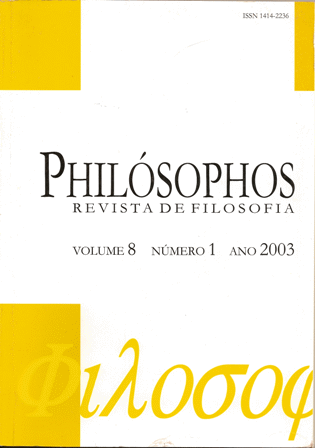
CUTER, João Vergílio Gallerani. SUBJETIVIDADE EMPÍRICA E TRANSCENDENTAL NO TRACTATUS DE WITTGENSTEIN. Philósophos - Revista de Filosofia, Goiânia, v. 8, n. 1, 2008. DOI: 10.5216/phi.v8i1.3206. Disponível em: https://revistas.ufg.br/philosophos/article/view/3206. Acesso em: 1 mar. 2026.
Edição
Seção
Artigos Originais
Licença
Autores que publicam nesta revista concordam com os seguintes termos:
- Autores mantêm os direitos autorais e concedem à revista o direito de primeira publicação, sendo o trabalho simultaneamente licenciado sob a Creative Commons Attribution License o que permite o compartilhamento do trabalho com reconhecimento da autoria do trabalho e publicação inicial nesta revista.
- Autores têm autorização para assumir contratos adicionais separadamente, para distribuição não-exclusiva da versão do trabalho publicada nesta revista (ex.: publicar em repositório institucional ou como capítulo de livro), com reconhecimento de autoria e publicação inicial nesta revista.